

The biostimulants market would grow at a CAGR of 12.46% over the predicted time frame. The market is expected to increase in value from US$ 45.53 Bn in 2022 to US$ 116.5 Bn in 2030.
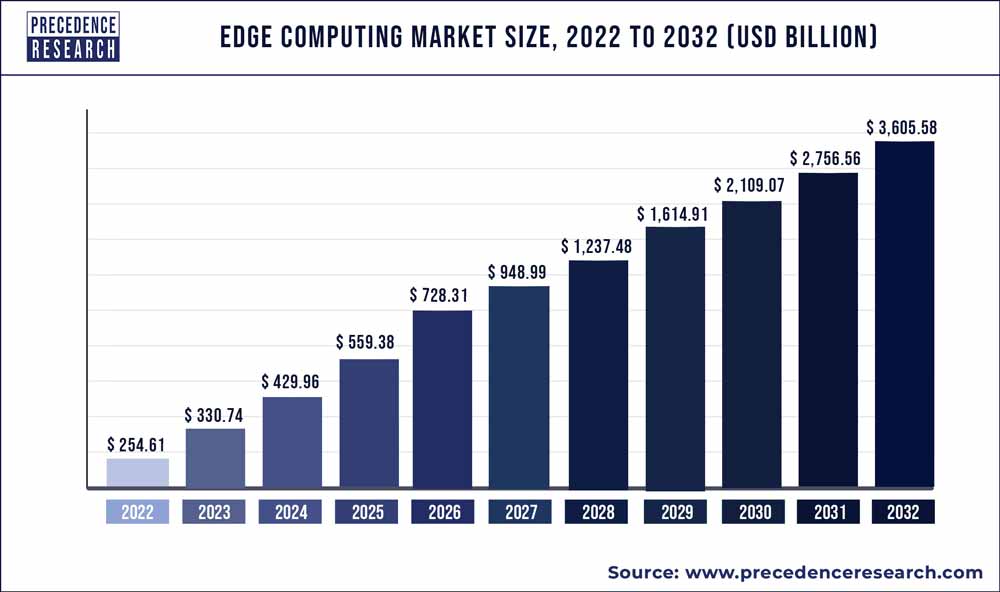
Key Takeaway
- North America region garnered largest market share 42% in 2022.
- By component, the U.S. edge computing market was valued at USD 694.2 million in 2022 and expected to witness growth at a CAGR of 33.1% from 2022 to 2030.
- By component, the server sector held for more than 45.5% of total revenue in 2022.
- The revenue share of edge sensors/routers was 25% in 2022.
- In 2022, the energy and industrial category accounted for more than 18.6% of total revenue.
- In 2022, the Industrial Internet of Things (IIoT) application category had a revenue share of more than 33%.
The on biostimulants Market, which provides a business strategy, research & development activities, concise outline of the market valuation, valuable insights pertaining to market share, size, supply chain analysis, competitive landscape and regional proliferation of this industry.
Download Free Sample@ https://www.precedenceresearch.com/sample/1847
Report Scope of the Edge Computing Market
| Report Coverage | Details |
| Market Size in 2022 | USD 116.5 Billion |
| Market Size by 2030 | USD 45.53 Billion |
| Growth Rate from 2022 to 2030 | CAGR of 12.46% |
| North America Market Share in 2021 | 41% |
| Base Year | 2022 |
| Forecast Period | 2023 to 2030 |
| Segments Covered | Component, Organization Size, Deployment, Industry Vertical, Application, Geography |
A recent report provides crucial insights along with application based and forecast information in the Global Biostimulants Market. The report provides a comprehensive analysis of key factors that are expected to drive the growth of this market. This study also provides a detailed overview of the opportunities along with the current trends observed in the Biostimulants market.
A quantitative analysis of the industry is compiled for a period of 10 years in order to assist players to grow in the market. Insights on specific revenue figures generated are also given in the report, along with projected revenue at the end of the forecast period.
Companies and Manufacturers Covered
The study covers key players operating in the market along with prime schemes and strategies implemented by each player to hold high positions in the industry. Such a tough vendor landscape provides a competitive outlook of the industry, consequently existing as a key insight. These insights were thoroughly analysed and prime business strategies and products that offer high revenue generation capacities were identified. Key players of the global Biostimulants market are included as given below:
Biostimulants Market Key Players
- Amazon Web Services (AWS), Inc.
- ABB
- Siemens AG
- IBM Corporation
- Aricent, Inc.
- Atos
- General Electric Company
- Hewlett Packard Enterprise Development
- Cisco Systems, Inc.
- Huawei Technologies Co., Ltd.
- Honeywell International Inc.
- SAP SE
- Intel Corporation
- Microsoft Corporation
- Rockwell Automation, Inc
Market Segments
By Component
- Hardware
- Edge Nodes/Gateways (Servers)
- Sensors/Routers
- Others
- Cameras
- Drones
- HMD
- Robots
- Others
- Hardware by Type
- Hardware by End Point Devices
- Software
- Services
- Edge-managed Platforms
By Organization Size
- Large Enterprises
- SMEs
By Deployment
- On Premise
- Cloud
By Industry Vertical
- Industrial
- Energy & Utilities
- Healthcare
- Agriculture
- Transportation & Logistics
- Retail
- Datacenters
- Wearables
- Smart Cities
- Smart Homes
- Smart Buildings
By Application
- IIoT
- Remote Monitoring
- Content Delivery
- Video Analytics
- AR/VR
- Others
By Geography
- North America
- U.S.
- Canada
- Europe
- U.K.
- Germany
- France
- Asia-Pacific
- China
- India
- Japan
- South Korea
- Malaysia
- Philippines
- Latin America
- Brazil
- Rest of Latin America
- Middle East & Africa (MEA)
- GCC
- North Africa
- South Africa
- Rest of the Middle East & Africa
Report Objectives
- To define, describe, and forecast the global biostimulants market based on product, and region
- To provide detailed information regarding the major factors influencing the growth of the market (drivers, opportunities, and industry-specific challenges)
- To strategically analyze micromarkets1 with respect to individual growth trends, future prospects, and contributions to the total market
- To analyze opportunities in the market for stakeholders and provide details of the competitive landscape for market leaders
- To forecast the size of market segments with respect to four main regions—North America, Europe, Asia Pacific and the Rest of the World (RoW)2
- To strategically profile key players and comprehensively analyze their product portfolios, market shares, and core competencies3
- To track and analyze competitive developments such as acquisitions, expansions, new product launches, and partnerships in the biostimulants market
Table of Content
Chapter 1. Introduction
1.1. Research Objective
1.2. Scope of the Study
1.3. Definition
Chapter 2. Research Methodology
2.1. Research Approach
2.2. Data Sources
2.3. Assumptions & Limitations
Chapter 3. Executive Summary
3.1. Market Snapshot
Chapter 4. Market Variables and Scope
4.1. Introduction
4.2. Market Classification and Scope
4.3. Industry Value Chain Analysis
4.3.1. Raw Material Procurement Analysis
4.3.2. Sales and Distribution Channel Analysis
4.3.3. Downstream Buyer Analysis
Chapter 5. COVID 19 Impact on Edge Computing Market
5.1. COVID-19 Landscape: Edge Computing Industry Impact
5.2. COVID 19 - Impact Assessment for the Industry
5.3. COVID 19 Impact: Global Major Government Policy
5.4. Market Trends and Opportunities in the COVID-19 Landscape
Chapter 6. Market Dynamics Analysis and Trends
6.1. Market Dynamics
6.1.1. Market Drivers
6.1.2. Market Restraints
6.1.3. Market Opportunities
6.2. Porter’s Five Forces Analysis
6.2.1. Bargaining power of suppliers
6.2.2. Bargaining power of buyers
6.2.3. Threat of substitute
6.2.4. Threat of new entrants
6.2.5. Degree of competition
Chapter 7. Competitive Landscape
7.1.1. Company Market Share/Positioning Analysis
7.1.2. Key Strategies Adopted by Players
7.1.3. Vendor Landscape
7.1.3.1. List of Suppliers
7.1.3.2. List of Buyers
Chapter 8. Global Edge Computing Market, By Component
8.1. Edge Computing Market, by Component, 2022-2030
8.1.1. Hardware
8.1.1.1. Market Revenue and Forecast (2017-2030)
8.1.2. Software
8.1.2.1. Market Revenue and Forecast (2017-2030)
8.1.3. Services
8.1.3.1. Market Revenue and Forecast (2017-2030)
8.1.4. Edge-managed Platforms
8.1.4.1. Market Revenue and Forecast (2017-2030)
Chapter 9. Global Edge Computing Market, By Organization Size
9.1. Edge Computing Market, by Organization Size, 2022-2030
9.1.1. Large Enterprises
9.1.1.1. Market Revenue and Forecast (2017-2030)
9.1.2. SMEs
9.1.2.1. Market Revenue and Forecast (2017-2030)
Chapter 10. Global Edge Computing Market, By Deployment
10.1. Edge Computing Market, by Deployment, 2022-2030
10.1.1. On Premise
10.1.1.1. Market Revenue and Forecast (2017-2030)
10.1.2. Cloud
10.1.2.1. Market Revenue and Forecast (2017-2030)
Chapter 11. Global Edge Computing Market, By Industry Vertical
11.1. Edge Computing Market, by Industry Vertical, 2022-2030
11.1.1. Industrial
11.1.1.1. Market Revenue and Forecast (2017-2030)
11.1.2. Energy & Utilities
11.1.2.1. Market Revenue and Forecast (2017-2030)
11.1.3. Healthcare
11.1.3.1. Market Revenue and Forecast (2017-2030)
11.1.4. Agriculture
11.1.4.1. Market Revenue and Forecast (2017-2030)
11.1.5. Transportation & Logistics
11.1.5.1. Market Revenue and Forecast (2017-2030)
11.1.6. Retail
11.1.6.1. Market Revenue and Forecast (2017-2030)
11.1.7. Datacenters
11.1.7.1. Market Revenue and Forecast (2017-2030)
11.1.8. Wearables
11.1.8.1. Market Revenue and Forecast (2017-2030)
11.1.9. Smart Cities
11.1.9.1. Market Revenue and Forecast (2017-2030)
11.1.10. Smart Homes
11.1.10.1. Market Revenue and Forecast (2017-2030)
11.1.11. Smart Buildings
11.1.11.1. Market Revenue and Forecast (2017-2030)
Chapter 12. Global Edge Computing Market, By Application
12.1. Edge Computing Market, by Application, 2022-2030
12.1.1. IIoT
12.1.1.1. Market Revenue and Forecast (2017-2030)
12.1.2. Remote Monitoring
12.1.2.1. Market Revenue and Forecast (2017-2030)
12.1.3. Content Delivery
12.1.3.1. Market Revenue and Forecast (2017-2030)
12.1.4. Video Analytics
12.1.4.1. Market Revenue and Forecast (2017-2030)
12.1.5. AR/VR
12.1.5.1. Market Revenue and Forecast (2017-2030)
12.1.6. Others
12.1.6.1. Market Revenue and Forecast (2017-2030)
Chapter 13. Global Edge Computing Market, Regional Estimates and Trend Forecast
13.1. North America
13.1.1. Market Revenue and Forecast, by Component (2017-2030)
13.1.2. Market Revenue and Forecast, by Organization Size (2017-2030)
13.1.3. Market Revenue and Forecast, by Deployment (2017-2030)
13.1.4. Market Revenue and Forecast, by Industry Vertical (2017-2030)
13.1.5. Market Revenue and Forecast, by Application (2017-2030)
13.1.6. U.S.
13.1.6.1. Market Revenue and Forecast, by Component (2017-2030)
13.1.6.2. Market Revenue and Forecast, by Organization Size (2017-2030)
13.1.6.3. Market Revenue and Forecast, by Deployment (2017-2030)
13.1.6.4. Market Revenue and Forecast, by Industry Vertical (2017-2030)
13.1.7. Market Revenue and Forecast, by Application (2017-2030)
13.1.8. Rest of North America
13.1.8.1. Market Revenue and Forecast, by Component (2017-2030)
13.1.8.2. Market Revenue and Forecast, by Organization Size (2017-2030)
13.1.8.3. Market Revenue and Forecast, by Deployment (2017-2030)
13.1.8.4. Market Revenue and Forecast, by Industry Vertical (2017-2030)
13.1.8.5. Market Revenue and Forecast, by Application (2017-2030)
13.2. Europe
13.2.1. Market Revenue and Forecast, by Component (2017-2030)
13.2.2. Market Revenue and Forecast, by Organization Size (2017-2030)
13.2.3. Market Revenue and Forecast, by Deployment (2017-2030)
13.2.4. Market Revenue and Forecast, by Industry Vertical (2017-2030)
13.2.5. Market Revenue and Forecast, by Application (2017-2030)
13.2.6. UK
13.2.6.1. Market Revenue and Forecast, by Component (2017-2030)
13.2.6.2. Market Revenue and Forecast, by Organization Size (2017-2030)
13.2.6.3. Market Revenue and Forecast, by Deployment (2017-2030)
13.2.7. Market Revenue and Forecast, by Industry Vertical (2017-2030)
13.2.8. Market Revenue and Forecast, by Application (2017-2030)
13.2.9. Germany
13.2.9.1. Market Revenue and Forecast, by Component (2017-2030)
13.2.9.2. Market Revenue and Forecast, by Organization Size (2017-2030)
13.2.9.3. Market Revenue and Forecast, by Deployment (2017-2030)
13.2.10. Market Revenue and Forecast, by Industry Vertical (2017-2030)
13.2.11. Market Revenue and Forecast, by Application (2017-2030)
13.2.12. France
13.2.12.1. Market Revenue and Forecast, by Component (2017-2030)
13.2.12.2. Market Revenue and Forecast, by Organization Size (2017-2030)
13.2.12.3. Market Revenue and Forecast, by Deployment (2017-2030)
13.2.12.4. Market Revenue and Forecast, by Industry Vertical (2017-2030)
13.2.13. Market Revenue and Forecast, by Application (2017-2030)
13.2.14. Rest of Europe
13.2.14.1. Market Revenue and Forecast, by Component (2017-2030)
13.2.14.2. Market Revenue and Forecast, by Organization Size (2017-2030)
13.2.14.3. Market Revenue and Forecast, by Deployment (2017-2030)
13.2.14.4. Market Revenue and Forecast, by Industry Vertical (2017-2030)
13.2.15. Market Revenue and Forecast, by Application (2017-2030)
13.3. APAC
13.3.1. Market Revenue and Forecast, by Component (2017-2030)
13.3.2. Market Revenue and Forecast, by Organization Size (2017-2030)
13.3.3. Market Revenue and Forecast, by Deployment (2017-2030)
13.3.4. Market Revenue and Forecast, by Industry Vertical (2017-2030)
13.3.5. Market Revenue and Forecast, by Application (2017-2030)
13.3.6. India
13.3.6.1. Market Revenue and Forecast, by Component (2017-2030)
13.3.6.2. Market Revenue and Forecast, by Organization Size (2017-2030)
13.3.6.3. Market Revenue and Forecast, by Deployment (2017-2030)
13.3.6.4. Market Revenue and Forecast, by Industry Vertical (2017-2030)
13.3.7. Market Revenue and Forecast, by Application (2017-2030)
13.3.8. China
13.3.8.1. Market Revenue and Forecast, by Component (2017-2030)
13.3.8.2. Market Revenue and Forecast, by Organization Size (2017-2030)
13.3.8.3. Market Revenue and Forecast, by Deployment (2017-2030)
13.3.8.4. Market Revenue and Forecast, by Industry Vertical (2017-2030)
13.3.9. Market Revenue and Forecast, by Application (2017-2030)
13.3.10. Japan
13.3.10.1. Market Revenue and Forecast, by Component (2017-2030)
13.3.10.2. Market Revenue and Forecast, by Organization Size (2017-2030)
13.3.10.3. Market Revenue and Forecast, by Deployment (2017-2030)
13.3.10.4. Market Revenue and Forecast, by Industry Vertical (2017-2030)
13.3.10.5. Market Revenue and Forecast, by Application (2017-2030)
13.3.11. Rest of APAC
13.3.11.1. Market Revenue and Forecast, by Component (2017-2030)
13.3.11.2. Market Revenue and Forecast, by Organization Size (2017-2030)
13.3.11.3. Market Revenue and Forecast, by Deployment (2017-2030)
13.3.11.4. Market Revenue and Forecast, by Industry Vertical (2017-2030)
13.3.11.5. Market Revenue and Forecast, by Application (2017-2030)
13.4. MEA
13.4.1. Market Revenue and Forecast, by Component (2017-2030)
13.4.2. Market Revenue and Forecast, by Organization Size (2017-2030)
13.4.3. Market Revenue and Forecast, by Deployment (2017-2030)
13.4.4. Market Revenue and Forecast, by Industry Vertical (2017-2030)
13.4.5. Market Revenue and Forecast, by Application (2017-2030)
13.4.6. GCC
13.4.6.1. Market Revenue and Forecast, by Component (2017-2030)
13.4.6.2. Market Revenue and Forecast, by Organization Size (2017-2030)
13.4.6.3. Market Revenue and Forecast, by Deployment (2017-2030)
13.4.6.4. Market Revenue and Forecast, by Industry Vertical (2017-2030)
13.4.7. Market Revenue and Forecast, by Application (2017-2030)
13.4.8. North Africa
13.4.8.1. Market Revenue and Forecast, by Component (2017-2030)
13.4.8.2. Market Revenue and Forecast, by Organization Size (2017-2030)
13.4.8.3. Market Revenue and Forecast, by Deployment (2017-2030)
13.4.8.4. Market Revenue and Forecast, by Industry Vertical (2017-2030)
13.4.9. Market Revenue and Forecast, by Application (2017-2030)
13.4.10. South Africa
13.4.10.1. Market Revenue and Forecast, by Component (2017-2030)
13.4.10.2. Market Revenue and Forecast, by Organization Size (2017-2030)
13.4.10.3. Market Revenue and Forecast, by Deployment (2017-2030)
13.4.10.4. Market Revenue and Forecast, by Industry Vertical (2017-2030)
13.4.10.5. Market Revenue and Forecast, by Application (2017-2030)
13.4.11. Rest of MEA
13.4.11.1. Market Revenue and Forecast, by Component (2017-2030)
13.4.11.2. Market Revenue and Forecast, by Organization Size (2017-2030)
13.4.11.3. Market Revenue and Forecast, by Deployment (2017-2030)
13.4.11.4. Market Revenue and Forecast, by Industry Vertical (2017-2030)
13.4.11.5. Market Revenue and Forecast, by Application (2017-2030)
13.5. Latin America
13.5.1. Market Revenue and Forecast, by Component (2017-2030)
13.5.2. Market Revenue and Forecast, by Organization Size (2017-2030)
13.5.3. Market Revenue and Forecast, by Deployment (2017-2030)
13.5.4. Market Revenue and Forecast, by Industry Vertical (2017-2030)
13.5.5. Market Revenue and Forecast, by Application (2017-2030)
13.5.6. Brazil
13.5.6.1. Market Revenue and Forecast, by Component (2017-2030)
13.5.6.2. Market Revenue and Forecast, by Organization Size (2017-2030)
13.5.6.3. Market Revenue and Forecast, by Deployment (2017-2030)
13.5.6.4. Market Revenue and Forecast, by Industry Vertical (2017-2030)
13.5.7. Market Revenue and Forecast, by Application (2017-2030)
13.5.8. Rest of LATAM
13.5.8.1. Market Revenue and Forecast, by Component (2017-2030)
13.5.8.2. Market Revenue and Forecast, by Organization Size (2017-2030)
13.5.8.3. Market Revenue and Forecast, by Deployment (2017-2030)
13.5.8.4. Market Revenue and Forecast, by Industry Vertical (2017-2030)
13.5.8.5. Market Revenue and Forecast, by Application (2017-2030)
Chapter 14. Company Profiles
14.1. Amazon Web Services (AWS), Inc.
14.1.1. Company Overview
14.1.2. Product Offerings
14.1.3. Financial Performance
14.1.4. Recent Initiatives
14.2. ABB
14.2.1. Company Overview
14.2.2. Product Offerings
14.2.3. Financial Performance
14.2.4. Recent Initiatives
14.3. Siemens AG
14.3.1. Company Overview
14.3.2. Product Offerings
14.3.3. Financial Performance
14.3.4. Recent Initiatives
14.4. IBM Corporation
14.4.1. Company Overview
14.4.2. Product Offerings
14.4.3. Financial Performance
14.4.4. Recent Initiatives
14.5. Aricent, Inc.
14.5.1. Company Overview
14.5.2. Product Offerings
14.5.3. Financial Performance
14.5.4. Recent Initiatives
14.6. Atos
14.6.1. Company Overview
14.6.2. Product Offerings
14.6.3. Financial Performance
14.6.4. Recent Initiatives
14.7. General Electric Company
14.7.1. Company Overview
14.7.2. Product Offerings
14.7.3. Financial Performance
14.7.4. Recent Initiatives
14.8. Hewlett Packard Enterprise Development
14.8.1. Company Overview
14.8.2. Product Offerings
14.8.3. Financial Performance
14.8.4. Recent Initiatives
14.9. Cisco Systems, Inc.
14.9.1. Company Overview
14.9.2. Product Offerings
14.9.3. Financial Performance
14.9.4. Recent Initiatives
14.10. Huawei Technologies Co., Ltd.
14.10.1. Company Overview
14.10.2. Product Offerings
14.10.3. Financial Performance
14.10.4. Recent Initiatives
Chapter 15. Research Methodology
15.1. Primary Research
15.2. Secondary Research
15.3. Assumptions
Chapter 16. Appendix
16.1. About Us
16.2. Glossary of Terms
Contact Us:
Precedence Research
Apt 1408 1785 Riverside Drive Ottawa, ON, K1G 3T7, Canada
Call: +1 774 402 6168
Email: sales@precedenceresearch.com
Website: https://www.precedenceresearch.com
Blog: https://www.pharma-geek.com


0 Comments