

According to the research report, the global telemedicinemarket size is expected to touch USD 123 Billion by 2030, from USD 60.8 Billion in 2022, growing with a significant CAGR of 17.16% from 2022 to 2030.
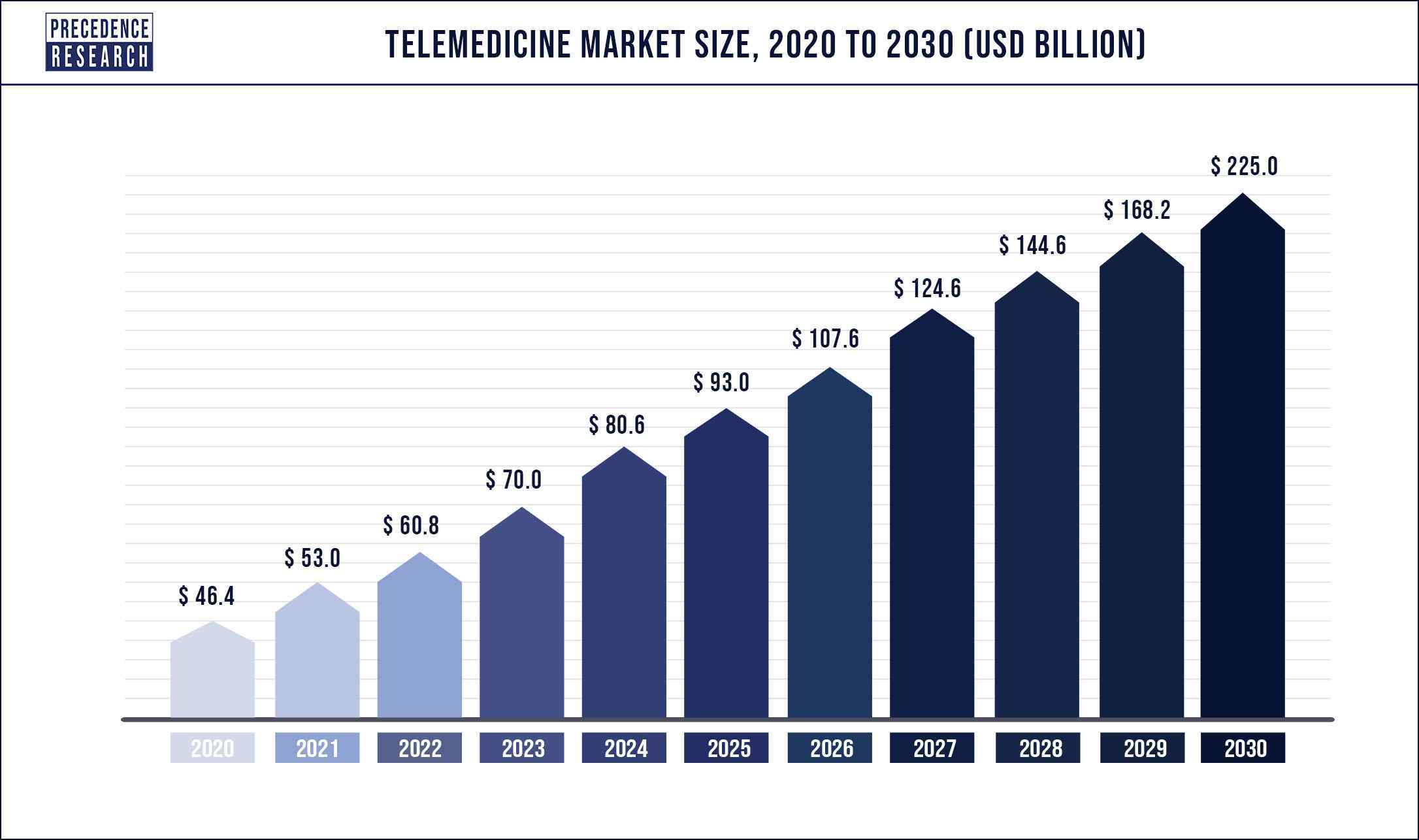
The telemedicine report offers a
comprehensive study of the current state expected at the major drivers, market
strategies, and key vendors’ growth. The report presents energetic visions to
conclude and study the market size, market hopes, and competitive surroundings.
The research also focuses on the important achievements of the market, research
& development, and regional growth of the leading competitors operating in
the market. The current trends of the global telemedicine in conjunction with
the geographical landscape of this vertical have also been included in this
report.
The report offers intricate dynamics about
different aspects of the global telemedicine market, which aids companies
operating in the market in making strategic development decisions. The study
also elaborates on significant changes that are highly anticipated to configure
growth of the global telemedicine during the forecast period. It also includes
a key indicator assessment that highlights growth prospects of this market and
estimates statistics related to growth of the market in terms of value (US$ Mn)
and volume (tons).
Sample
Link @ https://www.precedenceresearch.com/sample/1366
| Report Highlights | Details |
| Market Size | USD 123 Billion by 2030 |
| Growth Rate | CAGR of 17.16% From 2022 to 2030 |
| Largest Market | North America |
| Fastest Growing Market | Asia Pacific |
| Base Year | 2021 |
| Forecast Period | 2022 to 2030 |
| Segments Covered | Type, Component, Application, Technology, Delivery Mode, End User, Region |
This study covers a detailed segmentation
of the global telemedicine market, along with key information and a competition
outlook. The report mentions company profiles of players that are currently
dominating the global telemedicine market, wherein various developments,
expansions, and winning strategies practiced and implemented by leading players
have been presented in detail.
Key Players
- Koninklijke Philips N.V.
- Medtronic
- GE Healthcare
- Cerner Corporation
- Siemens Healthineers
- Cisco Systems, Inc.
- Teladoc Health Inc.
- American Well
- AMC Health
- MDLive
Market Segmentation
- Tele-hospital
- Tele-Home
- mHealth
By Component
- Product
- Hardware
- Software
- Others
- Services
- Tele-consulting
- Tele-monitoring
- Tele-education
By Application
- Telepathology
- Teleradiology
- Teledermatology
- Telepsychiatry
- Telecardiology
- Others
By Technology
- Store & Forward
- Real-Time
- Others
By Delivery Mode
- Web/Mobile
- Telephonic
- Visualized
- Call Centers
By End-users
- Providers
- Patients
- Payers
- Others
By Geography
- North America
- U.S.
- Canada
- Europe
- U.K.
- Germany
- France
- Asia Pacific
- China
- India
- Japan
- South Korea
- Rest of the World
Research Methodology
The research methodology adopted by
analysts for compiling the global telemedicine report is based on detailed
primary as well as secondary research. With the help of in-depth insights of
the market-affiliated information that is obtained and legitimated by
market-admissible resources, analysts have offered riveting observations and authentic
forecasts for the global market.
During the primary research phase, analysts
interviewed market stakeholders, investors, brand managers, vice presidents,
and sales and marketing managers. Based on data obtained through interviews of
genuine resources, analysts have emphasized the changing scenario of the global
market.
For secondary research, analysts
scrutinized numerous annual report publications, white papers, market
association publications, and company websites to obtain the necessary understanding
of the global telemedicine market.
TABLE OF CONTENT
Chapter 1. Introduction
1.1. Research Objective
1.2. Scope of the Study
1.3. Definition
Chapter 2. Research Methodology
2.1. Research Approach
2.2. Data Sources
2.3. Assumptions & Limitations
Chapter 3. Executive Summary
3.1. Market Snapshot
Chapter 4. Market Variables and Scope
4.1. Introduction
4.2. Market Classification and Scope
4.3. Industry Value Chain Analysis
4.3.1. Raw Material Procurement Analysis
4.3.2. Sales and Distribution Channel Analysis
4.3.3. Downstream Buyer Analysis
Chapter 5. COVID 19 Impact on Telemedicine Market
5.1. COVID-19 Landscape: Telemedicine Industry Impact
5.2. COVID 19 - Impact Assessment for the Industry
5.3. COVID 19 Impact: Global Major Government Policy
5.4. Market Trends and Opportunities in the COVID-19 Landscape
Chapter 6. Market Dynamics Analysis and Trends
6.1. Market Dynamics
6.1.1. Market Drivers
6.1.2. Market Restraints
6.1.3. Market Opportunities
6.2. Porter’s Five Forces Analysis
6.2.1. Bargaining power of suppliers
6.2.2. Bargaining power of buyers
6.2.3. Threat of substitute
6.2.4. Threat of new entrants
6.2.5. Degree of competition
Chapter 7. Competitive Landscape
7.1.1. Company Market Share/Positioning Analysis
7.1.2. Key Strategies Adopted by Players
7.1.3. Vendor Landscape
7.1.3.1. List of Suppliers
7.1.3.2. List of Buyers
Chapter 8. Global Telemedicine Market, By Type
8.1. Telemedicine Market, by Type, 2021-2030
8.1.1. Tele-hospital
8.1.1.1. Market Revenue and Forecast (2019-2030)
8.1.2. Tele-Home
8.1.2.1. Market Revenue and Forecast (2019-2030)
Chapter 9. Global Telemedicine Market, By Application Type
9.1. Telemedicine Market, by Application Type, 2021-2030
9.1.1. Telepathology
9.1.1.1. Market Revenue and Forecast (2019-2030)
9.1.2. Teleradiology
9.1.2.1. Market Revenue and Forecast (2019-2030)
9.1.3. Teledermatology
9.1.3.1. Market Revenue and Forecast (2019-2030)
9.1.4. Telepsychiatry
9.1.4.1. Market Revenue and Forecast (2019-2030)
9.1.5. Telecardiology
9.1.5.1. Market Revenue and Forecast (2019-2030)
9.1.6. Others
9.1.6.1. Market Revenue and Forecast (2019-2030)
Chapter 10. Global Telemedicine Market, By Technology Type
10.1. Telemedicine Market, by Technology Type, 2021-2030
10.1.1. Store & Forward
10.1.1.1. Market Revenue and Forecast (2019-2030)
10.1.2. Real-Time
10.1.2.1. Market Revenue and Forecast (2019-2030)
10.1.3. Others
10.1.3.1. Market Revenue and Forecast (2019-2030)
Chapter 11. Global Telemedicine Market, By Delivery Mode Type
11.1. Telemedicine Market, by Delivery Mode Type, 2021-2030
11.1.1. Web/Mobile (Telephonic, Visualized)
11.1.1.1. Market Revenue and Forecast (2019-2030)
11.1.2. Call Centers
11.1.2.1. Market Revenue and Forecast (2019-2030)
Chapter 12. Global Telemedicine Market, By Component Type
12.1. Telemedicine Market, by Component, 2021-2030
12.1.1. Product (Hardware, Software, Others)
12.1.1.1. Market Revenue and Forecast (2019-2030)
12.1.2. Services (Tele-consulting, Tele-monitoring, Tele-education)
12.1.2.1. Market Revenue and Forecast (2019-2030)
Chapter 13. Global Telemedicine Market, Regional Estimates and Trend Forecast
13.1. North America
13.1.1. Market Revenue and Forecast, by Type (2019-2030)
13.1.2. Market Revenue and Forecast, by Application (2019-2030)
13.1.3. Market Revenue and Forecast, by Technology (2019-2030)
13.1.4. Market Revenue and Forecast, by Delivery Mode (2019-2030)
13.1.5. Market Revenue and Forecast, by Component (2019-2030)
13.1.6. U.S.
13.1.6.1. Market Revenue and Forecast, by Type (2019-2030)
13.1.6.2. Market Revenue and Forecast, by Application (2019-2030)
13.1.6.3. Market Revenue and Forecast, by Technology (2019-2030)
13.1.6.4. Market Revenue and Forecast, by Delivery Mode (2019-2030)
13.1.7. Market Revenue and Forecast, by Component (2019-2030)
13.1.8. Rest of North America
13.1.8.1. Market Revenue and Forecast, by Type (2019-2030)
13.1.8.2. Market Revenue and Forecast, by Application (2019-2030)
13.1.8.3. Market Revenue and Forecast, by Technology (2019-2030)
13.1.8.4. Market Revenue and Forecast, by Delivery Mode (2019-2030)
13.1.8.5. Market Revenue and Forecast, by Component (2019-2030)
13.2. Europe
13.2.1. Market Revenue and Forecast, by Type (2019-2030)
13.2.2. Market Revenue and Forecast, by Application (2019-2030)
13.2.3. Market Revenue and Forecast, by Technology (2019-2030)
13.2.4. Market Revenue and Forecast, by Delivery Mode (2019-2030)
13.2.5. Market Revenue and Forecast, by Component (2019-2030)
13.2.6. UK
13.2.6.1. Market Revenue and Forecast, by Type (2019-2030)
13.2.6.2. Market Revenue and Forecast, by Application (2019-2030)
13.2.6.3. Market Revenue and Forecast, by Technology (2019-2030)
13.2.7. Market Revenue and Forecast, by Delivery Mode (2019-2030)
13.2.8. Market Revenue and Forecast, by Component (2019-2030)
13.2.9. Germany
13.2.9.1. Market Revenue and Forecast, by Type (2019-2030)
13.2.9.2. Market Revenue and Forecast, by Application (2019-2030)
13.2.9.3. Market Revenue and Forecast, by Technology (2019-2030)
13.2.10. Market Revenue and Forecast, by Delivery Mode (2019-2030)
13.2.11. Market Revenue and Forecast, by Component (2019-2030)
13.2.12. France
13.2.12.1. Market Revenue and Forecast, by Type (2019-2030)
13.2.12.2. Market Revenue and Forecast, by Application (2019-2030)
13.2.12.3. Market Revenue and Forecast, by Technology (2019-2030)
13.2.12.4. Market Revenue and Forecast, by Delivery Mode (2019-2030)
13.2.13. Market Revenue and Forecast, by Component (2019-2030)
13.2.14. Rest of Europe
13.2.14.1. Market Revenue and Forecast, by Type (2019-2030)
13.2.14.2. Market Revenue and Forecast, by Application (2019-2030)
13.2.14.3. Market Revenue and Forecast, by Technology (2019-2030)
13.2.14.4. Market Revenue and Forecast, by Delivery Mode (2019-2030)
13.2.15. Market Revenue and Forecast, by Component (2019-2030)
13.3. APAC
13.3.1. Market Revenue and Forecast, by Type (2019-2030)
13.3.2. Market Revenue and Forecast, by Application (2019-2030)
13.3.3. Market Revenue and Forecast, by Technology (2019-2030)
13.3.4. Market Revenue and Forecast, by Delivery Mode (2019-2030)
13.3.5. Market Revenue and Forecast, by Component (2019-2030)
13.3.6. India
13.3.6.1. Market Revenue and Forecast, by Type (2019-2030)
13.3.6.2. Market Revenue and Forecast, by Application (2019-2030)
13.3.6.3. Market Revenue and Forecast, by Technology (2019-2030)
13.3.6.4. Market Revenue and Forecast, by Delivery Mode (2019-2030)
13.3.7. Market Revenue and Forecast, by Component (2019-2030)
13.3.8. China
13.3.8.1. Market Revenue and Forecast, by Type (2019-2030)
13.3.8.2. Market Revenue and Forecast, by Application (2019-2030)
13.3.8.3. Market Revenue and Forecast, by Technology (2019-2030)
13.3.8.4. Market Revenue and Forecast, by Delivery Mode (2019-2030)
13.3.9. Market Revenue and Forecast, by Component (2019-2030)
13.3.10. Japan
13.3.10.1. Market Revenue and Forecast, by Type (2019-2030)
13.3.10.2. Market Revenue and Forecast, by Application (2019-2030)
13.3.10.3. Market Revenue and Forecast, by Technology (2019-2030)
13.3.10.4. Market Revenue and Forecast, by Delivery Mode (2019-2030)
13.3.10.5. Market Revenue and Forecast, by Component (2019-2030)
13.3.11. Rest of APAC
13.3.11.1. Market Revenue and Forecast, by Type (2019-2030)
13.3.11.2. Market Revenue and Forecast, by Application (2019-2030)
13.3.11.3. Market Revenue and Forecast, by Technology (2019-2030)
13.3.11.4. Market Revenue and Forecast, by Delivery Mode (2019-2030)
13.3.11.5. Market Revenue and Forecast, by Component (2019-2030)
13.4. MEA
13.4.1. Market Revenue and Forecast, by Type (2019-2030)
13.4.2. Market Revenue and Forecast, by Application (2019-2030)
13.4.3. Market Revenue and Forecast, by Technology (2019-2030)
13.4.4. Market Revenue and Forecast, by Delivery Mode (2019-2030)
13.4.5. Market Revenue and Forecast, by Component (2019-2030)
13.4.6. GCC
13.4.6.1. Market Revenue and Forecast, by Type (2019-2030)
13.4.6.2. Market Revenue and Forecast, by Application (2019-2030)
13.4.6.3. Market Revenue and Forecast, by Technology (2019-2030)
13.4.6.4. Market Revenue and Forecast, by Delivery Mode (2019-2030)
13.4.7. Market Revenue and Forecast, by Component (2019-2030)
13.4.8. North Africa
13.4.8.1. Market Revenue and Forecast, by Type (2019-2030)
13.4.8.2. Market Revenue and Forecast, by Application (2019-2030)
13.4.8.3. Market Revenue and Forecast, by Technology (2019-2030)
13.4.8.4. Market Revenue and Forecast, by Delivery Mode (2019-2030)
13.4.9. Market Revenue and Forecast, by Component (2019-2030)
13.4.10. South Africa
13.4.10.1. Market Revenue and Forecast, by Type (2019-2030)
13.4.10.2. Market Revenue and Forecast, by Application (2019-2030)
13.4.10.3. Market Revenue and Forecast, by Technology (2019-2030)
13.4.10.4. Market Revenue and Forecast, by Delivery Mode (2019-2030)
13.4.10.5. Market Revenue and Forecast, by Component (2019-2030)
13.4.11. Rest of MEA
13.4.11.1. Market Revenue and Forecast, by Type (2019-2030)
13.4.11.2. Market Revenue and Forecast, by Application (2019-2030)
13.4.11.3. Market Revenue and Forecast, by Technology (2019-2030)
13.4.11.4. Market Revenue and Forecast, by Delivery Mode (2019-2030)
13.4.11.5. Market Revenue and Forecast, by Component (2019-2030)
13.5. Latin America
13.5.1. Market Revenue and Forecast, by Type (2019-2030)
13.5.2. Market Revenue and Forecast, by Application (2019-2030)
13.5.3. Market Revenue and Forecast, by Technology (2019-2030)
13.5.4. Market Revenue and Forecast, by Delivery Mode (2019-2030)
13.5.5. Market Revenue and Forecast, by Component (2019-2030)
13.5.6. Brazil
13.5.6.1. Market Revenue and Forecast, by Type (2019-2030)
13.5.6.2. Market Revenue and Forecast, by Application (2019-2030)
13.5.6.3. Market Revenue and Forecast, by Technology (2019-2030)
13.5.6.4. Market Revenue and Forecast, by Delivery Mode (2019-2030)
13.5.7. Market Revenue and Forecast, by Component (2019-2030)
13.5.8. Rest of LATAM
13.5.8.1. Market Revenue and Forecast, by Type (2019-2030)
13.5.8.2. Market Revenue and Forecast, by Application (2019-2030)
13.5.8.3. Market Revenue and Forecast, by Technology (2019-2030)
13.5.8.4. Market Revenue and Forecast, by Delivery Mode (2019-2030)
13.5.8.5. Market Revenue and Forecast, by Component (2019-2030)
Chapter 14. Company Profiles
14.1. Koninklijke Philips N.V.
14.1.1. Company Overview
14.1.2. Product Offerings
14.1.3. Financial Performance
14.1.4. Recent Initiatives
14.2. Medtronic
14.2.1. Company Overview
14.2.2. Product Offerings
14.2.3. Financial Performance
14.2.4. Recent Initiatives
14.3. GE Healthcare
14.3.1. Company Overview
14.3.2. Product Offerings
14.3.3. Financial Performance
14.3.4. Recent Initiatives
14.4. Cerner Corporation
14.4.1. Company Overview
14.4.2. Product Offerings
14.4.3. Financial Performance
14.4.4. Recent Initiatives
14.5. Siemens Healthineers
14.5.1. Company Overview
14.5.2. Product Offerings
14.5.3. Financial Performance
14.5.4. Recent Initiatives
14.6. Cisco Systems, Inc.
14.6.1. Company Overview
14.6.2. Product Offerings
14.6.3. Financial Performance
14.6.4. Recent Initiatives
14.7. Teladoc Health Inc.
14.7.1. Company Overview
14.7.2. Product Offerings
14.7.3. Financial Performance
14.7.4. Recent Initiatives
14.8. American Well
14.8.1. Company Overview
14.8.2. Product Offerings
14.8.3. Financial Performance
14.8.4. Recent Initiatives
14.9. AMC Health
14.9.1. Company Overview
14.9.2. Product Offerings
14.9.3. Financial Performance
14.9.4. Recent Initiatives
14.10. MDLive
14.10.1. Company Overview
14.10.2. Product Offerings
14.10.3. Financial Performance
14.10.4. Recent Initiatives
Chapter 15. Research Methodology
15.1. Primary Research
15.2. Secondary Research
15.3. Assumptions
Chapter 16. Appendix
16.1. About Us
16.2. Glossary of Terms
Contact Us:
Precedence Research
Apt 1408 1785 Riverside Drive Ottawa, ON, K1G 3T7, Canada
Call: +1
774 402 6168
Email: sales@precedenceresearch.com
Website: https://www.precedenceresearch.com
Blog: https://www.pharma-geek.com


0 Comments